
Plants show clearly when something is missing. Pale new shoots, holes in older leaves or stunted tips are all messages about what the plant cannot find in the water. Learning to read these symptoms makes it much easier to adjust fertilisation before a small shortage turns into poor growth and algae.
A useful rule: mobile nutrients (nitrogen, phosphate, potassium, magnesium) can be moved by the plant from old leaves to new ones, so shortages show up on older leaves first. Immobile nutrients (iron, calcium, most trace elements) stay where they are, so deficiencies appear on the newest growth.
1. CO2
Carbon is the building block of every plant, and in most aquariums it is the first resource to run out. Without enough CO2 plants grow slowly, leaves stay small and many species develop a chalky white crust on their leaves as they start pulling carbon from carbonate hardness. A CO2 drop checker filled with CO2 indicator solution gives a simple, continuous reading of the CO2 level. For tanks without injection, LGND C5 Eos supplies a bioavailable carbon source.
2. Macronutrients
Nitrogen
Nitrogen is part of chlorophyll and every protein. When it runs short, older leaves turn evenly pale yellow, starting at the tip, while new growth stays small. Red plants may lose colour. Supplement with LGND Nitrogen.
Phosphate
Phosphate drives energy transfer inside the plant. A shortage causes slow growth, dark or bluish-green older leaves and, in some species, small spots of dead tissue. Contrary to old advice, moderate phosphate does not cause algae in a balanced tank. Use LGND Phosphat to keep it steady.
Potassium
Potassium controls water balance and enzyme activity. Typical signs are small holes that appear in older leaves and edges that turn yellow and then brown. It is almost absent from fish waste, so it must be added. LGND Potassium covers this need.
Magnesium
Magnesium sits at the centre of the chlorophyll molecule. A deficiency shows as yellowing between the veins of older leaves while the veins themselves remain green. It is common in soft or RO water; remineralising with LGND Evenness restores calcium and magnesium.
3. Micronutrients
Iron
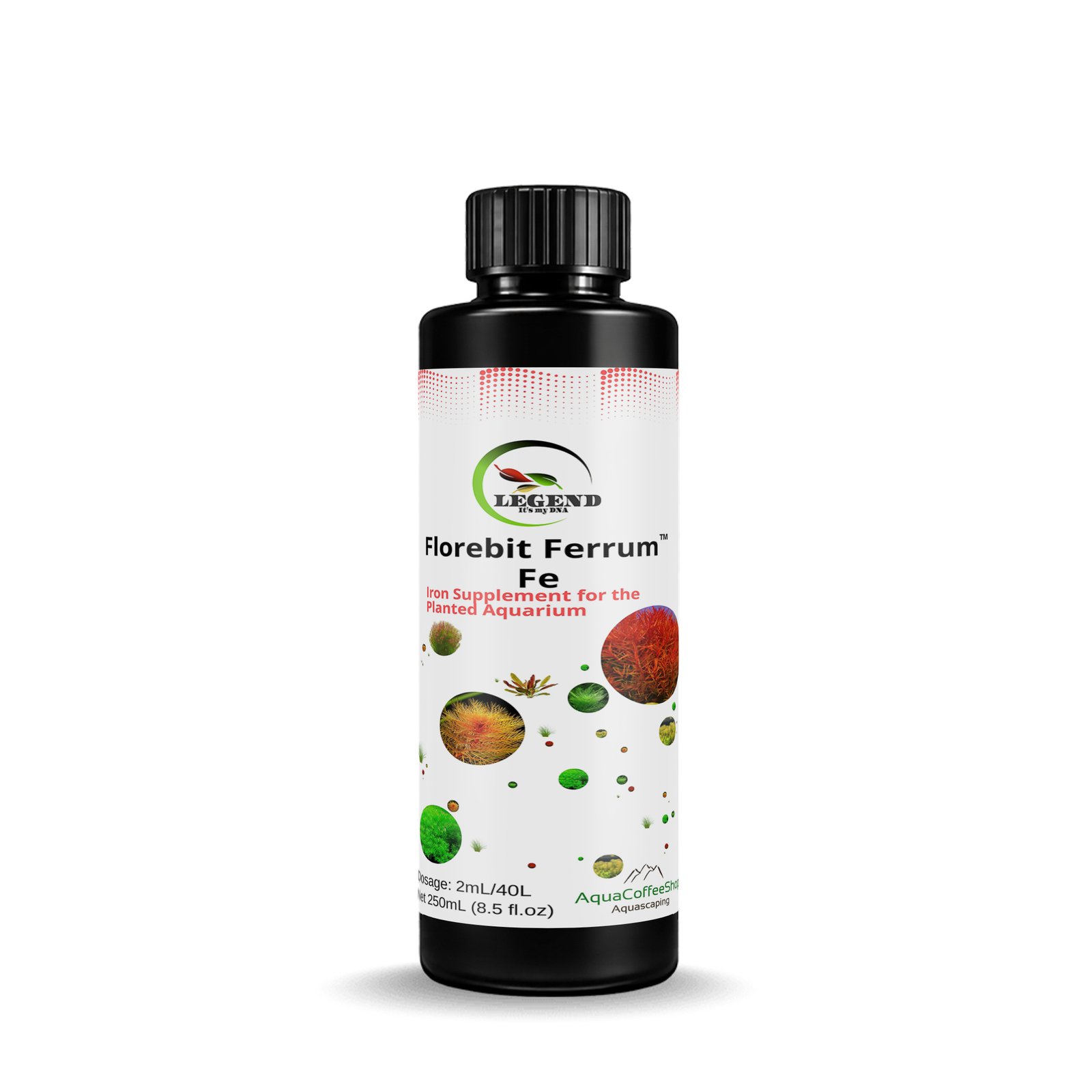
Iron is needed to build chlorophyll. Because it is immobile, the newest leaves turn pale yellow to almost white while the veins stay green for longer. Regular, small doses work best. LGND Florebit Ferrum Fe is a concentrated iron source.
Other trace elements
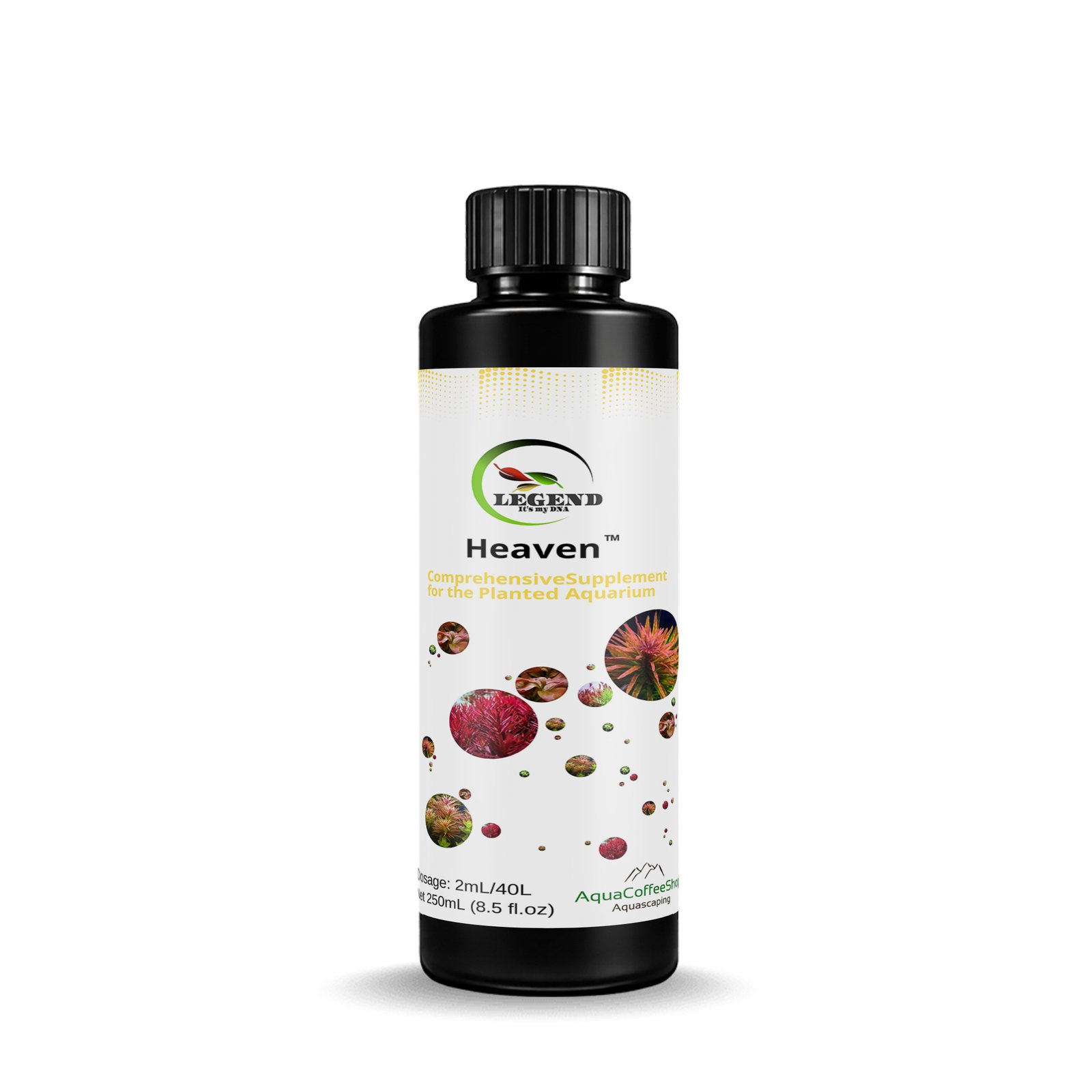
Manganese, zinc, copper, boron and molybdenum are needed in tiny amounts but are just as essential. Deformed or twisted new leaves, tiny shoots and dying growth tips often point to a trace element gap. LGND Heaven supplies a balanced trace element mix; LGND Avalon and LGND Elysium combine trace elements with macro nutrients in one bottle.
4. Light
Light is the engine that drives nutrient uptake. Too little light and plants stretch, lose lower leaves and cannot use the fertiliser you add. Too much light without matching CO2 and nutrients leads to deficiency symptoms and algae. Aim for a photoperiod of around 7 to 8 hours and increase intensity only when CO2 and fertilisation keep pace.
Tip: change one thing at a time and give plants one to two weeks to respond. New leaves show the result of a correction; damaged old leaves will not recover and can be trimmed. To strengthen plants under stress, LGND Ancestral Phi and LGND Revival can support recovery.